

Here is the Final Rectification and Full Post
The Regulus Astrology series on the technology entrepreneurs driving the artificial intelligence revolution turns to Demis Hassabis (1976–Living), the British neuroscientist and co-founder of DeepMind. Unlike the Silicon Valley network of entrepreneurs, venture capitalists and software engineers that produced figures such as Elon Musk, Peter Thiel, Mark Zuckerberg and Sam Altman, Hassabis followed a different path. A childhood chess prodigy and computer-game developer, he became a cognitive neuroscientist whose research into memory and imagination helped shape his pursuit of artificial general intelligence.
For much of the 2010s, Hassabis appeared to be winning that pursuit. DeepMind’s AlphaGo defeated world champion Lee Sedol in 2016, demonstrating that machine learning could master problems once thought beyond the reach of computers. The subsequent development of AlphaFold extended artificial intelligence into biology, culminating in Hassabis’s 2024 Nobel Prize in Chemistry. Yet DeepMind’s early leadership did not translate into dominance of the emerging commercial AI industry. Hassabis initially underestimated the potential of large language models, allowing OpenAI under Sam Altman to seize the initiative with ChatGPT in November 2022. The reversal left Hassabis confronting a question familiar to many pioneering scientists: How could the organization that helped establish the technological frontier find itself overtaken by a competitor pursuing a different approach?
Hassabis also differs from his Silicon Valley counterparts in motivation. His overriding ambition has been to understand how intelligence works and use that understanding to uncover the laws governing the natural world. Wealth and corporate influence have been important chiefly as means of financing that investigation. His horoscope offers an interesting correspondence. With Gemini rising and five planets concentrated in Leo in the 3rd house, the chart emphasizes intellectual activity, communication and the public expression of ideas. Yet the proposed Victor is Jupiter/Taurus in the 12th house, a less obvious placement whose timing closely follows important developments in his research on memory and imagination.
The rectification also raises questions about the relationship between scientific persistence and commercial adaptability. A Moon approaching its conjunction with the Sun by just 13 minutes of arc suggests a concentration of purpose that can sustain years of difficult research while making changes in intellectual direction more challenging. The following analysis examines how Jupiter’s periods, the Moon’s configuration, sect and Zodiacal Releasing correspond with Hassabis’s scientific breakthroughs, organizational setbacks and changing position in the competition for artificial intelligence.
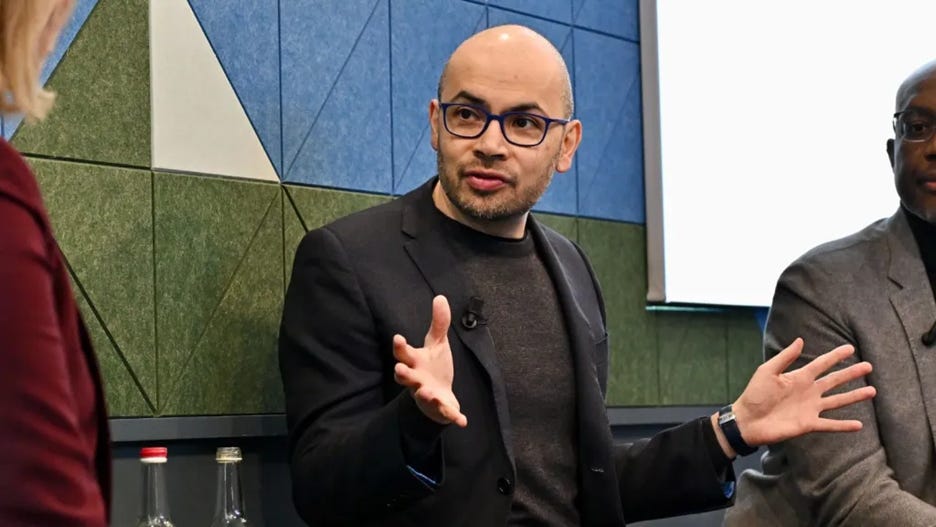
Demis Hassabis has spent much of his life pursuing a question that began with his childhood fascination with games and eventually led him to neuroscience and artificial intelligence: How does intelligence work, and can its underlying principles be discovered and reproduced in a machine? Unlike many of the entrepreneurs who have come to dominate the technology industry, Hassabis has been motivated less by the accumulation of wealth or corporate power than by the possibility of using intelligence to understand the natural world. His ambition has been to build systems capable not merely of performing tasks but of discovering new knowledge.
Born in London on 27 July 1976 to a Greek Cypriot father and a Chinese Singaporean mother, Hassabis demonstrated unusual intellectual ability from an early age. He learned chess as a young child and became one of Britain’s leading junior players, competing internationally before reaching his teens. Chess offered a demanding laboratory for studying memory, planning and decision-making. Yet it also exposed him to the limitations of devoting exceptional mental effort to winning a game. Following an exhausting tournament defeat in May 1989, he increasingly questioned whether his abilities might be better applied to problems with broader significance.
Computer programming offered an alternative. Using a ZX Spectrum acquired during childhood, Hassabis taught himself to write software and became fascinated by the possibility of creating intelligent behavior inside computer games. As a teenager, he joined Peter Molyneux’s Bullfrog Productions, contributing to games including Syndicate and Theme Park. The latter used simulated behavior to create a complex virtual environment in which players managed an amusement park. For Hassabis, games were more than entertainment. They provided simplified worlds in which the processes of intelligence could be modeled, tested and improved.
After graduating from Queens’ College, Cambridge, in 1997 with a double first in computer science, Hassabis established Elixir Studios in 1998. His ambition was to develop games incorporating sophisticated artificial intelligence, including Republic: The Revolution and Evil Genius. The studio attracted investment and assembled a substantial development team, but its commercial performance failed to justify the expense of its projects. Hassabis relinquished day-to-day executive responsibilities in 2003, and Elixir closed in April 2005.
The failure marked an important turning point. Rather than establish another games company, Hassabis returned to academia to investigate the biological foundations of intelligence. At University College London, he studied neuroscience under Eleanor Maguire, concentrating on memory and imagination. His research demonstrated that the brain’s ability to remember past experiences is closely related to its ability to construct imagined scenes and possible futures. Patients with damage to the hippocampus could struggle not only to recall personal experiences but also to imagine coherent new ones.
The implications extended beyond neuroscience. Memory was not simply a storehouse of past information; it was a mechanism through which intelligence could construct models of the world, anticipate possibilities and guide future action. This understanding became central to Hassabis’s conception of artificial intelligence. A genuinely intelligent system would need to learn from experience, retain useful knowledge and apply it flexibly to unfamiliar problems.
In 2010, Hassabis founded DeepMind in London with Shane Legg and Mustafa Suleyman. Legg contributed theoretical expertise in machine intelligence, while Suleyman helped develop the company’s organizational and commercial relationships. Hassabis supplied the overarching scientific vision, combining neuroscience, machine learning and the lessons he had learned from building games.
DeepMind initially lacked a commercial product and depended on venture-capital financing. Peter Thiel’s Founders Fund became an early investor, but subsequent fundraising exposed tensions between Hassabis’s long-term scientific objectives and investors’ expectations of commercial returns. During a difficult financing round in 2013, the company came close to exhausting its resources. Google’s acquisition of DeepMind, announced in January 2014 for a reported $650 million, resolved the immediate financing problem while giving Hassabis access to the computing infrastructure necessary for increasingly ambitious experiments.
DeepMind’s early research concentrated on reinforcement learning, a method in which artificial agents learn through trial and error, receiving feedback from their successes and failures. Computer games provided an ideal testing environment. The company developed systems capable of learning to play Atari games directly from screen images, demonstrating that the same underlying architecture could acquire different skills without being programmed separately for each game.
The decisive breakthrough came with AlphaGo. In October 2015, the system defeated European Go champion Fan Hui, a result announced in Nature in January 2016. Two months later, AlphaGo defeated Lee Sedol, one of the world’s strongest players, by four games to one. Go had long been considered a particularly difficult challenge for artificial intelligence because of its enormous number of possible positions and its reliance on pattern recognition and strategic judgment.
The victory made Hassabis internationally prominent and established DeepMind as a leader in artificial intelligence. Subsequent systems, including AlphaGo Zero and AlphaZero, demonstrated that machines could achieve exceptional performance through self-play, discovering strategies without relying primarily on examples of human expertise. DeepMind appeared to have established a powerful route toward increasingly general intelligence.
But Hassabis’s ultimate objective was not to produce machines that could defeat human champions. He wanted to apply AI to the scientific problems that had resisted conventional methods. One of the most important was protein folding: predicting the three-dimensional structure of a protein from its amino-acid sequence. Understanding protein structures is essential to biology and medicine, but experimental determination can be difficult and expensive.
DeepMind’s first AlphaFold system achieved a leading result at the CASP13 protein-structure prediction competition in 2018. Dissatisfied with its limitations, Hassabis authorized a fundamental redesign of the system, even though the replacement initially performed worse. The decision was vindicated in November 2020, when AlphaFold2 demonstrated a substantial improvement in prediction accuracy. DeepMind subsequently made its predictions available to researchers worldwide, eventually releasing structures for more than 200 million proteins.
AlphaFold was a vindication of Hassabis’s original ambition. Artificial intelligence had moved beyond mastering games to providing scientists with knowledge that could accelerate research across biology and medicine. In October 2024, Hassabis and his colleague John Jumper shared half of the Nobel Prize in Chemistry for their work on protein-structure prediction, with the other half awarded to David Baker.
Yet the scientific success concealed a growing competitive problem. While DeepMind concentrated on reinforcement learning, world models and scientific applications, other researchers were developing large language models trained on enormous quantities of text. Google’s own researchers had introduced the Transformer architecture in 2017, but the company did not initially translate that invention into the consumer AI products that would come to dominate the industry.
Hassabis recognized the importance of language as a component of intelligence, but he placed greater emphasis on systems that could reason, plan, learn through interaction and develop an understanding of the physical world. Language models, in his view, were an important part of the solution rather than a complete route to artificial general intelligence. This scientific judgment was defensible, but it contributed to a strategic miscalculation: DeepMind underestimated how quickly large language models could become commercially useful, even without possessing the broader intelligence Hassabis sought to create.
OpenAI exploited that opportunity. The release of ChatGPT on 30 November 2022 transformed the competitive landscape, demonstrating the mass-market appeal of conversational AI. GPT-4, introduced in March 2023, reinforced OpenAI’s technological reputation. DeepMind, which had seemed to lead the industry following AlphaGo, found itself responding to advances made elsewhere.
Google reorganized its AI operations in April 2023, merging Google Brain and DeepMind under Hassabis’s leadership. The appointment greatly expanded his authority, but it also changed the nature of his responsibilities. Instead of directing an independent scientific laboratory, he now had to coordinate competing research cultures, retain leading scientists and produce models capable of challenging OpenAI and Anthropic.
The resulting Gemini program experienced an uneven development. Google’s initial Bard launch was overshadowed by errors and unfavorable comparisons with ChatGPT. Gemini subsequently improved, but its early releases struggled to establish a sustained advantage over competing systems. Meanwhile, Anthropic developed a strong reputation in coding and enterprise AI, creating another source of competitive pressure.
Hassabis also faced a recurring organizational difficulty: the departure of important colleagues. DeepMind co-founder Mustafa Suleyman had left the laboratory in 2019 and subsequently established Inflection AI before becoming chief executive of Microsoft AI in 2024. During 2026, the departures of prominent researchers, including David Silver, Noam Shazeer and John Jumper, raised further questions about Google’s ability to retain the people responsible for its most important scientific achievements.
These losses were particularly consequential because they involved different parts of DeepMind’s intellectual foundation. Silver had been central to reinforcement learning and AlphaGo; Shazeer was a leading figure in the development of language models; and Jumper had shared the Nobel Prize with Hassabis for AlphaFold. Their departures illustrated the difficulty of maintaining a unified research organization in an industry offering exceptional financial rewards and opportunities for scientific independence.
Google nevertheless achieved significant improvements with Gemini 2.5 and Gemini 3 during 2025, demonstrating that the company remained capable of competing at the technological frontier. The recovery did not eliminate the underlying tensions between fundamental research and the demands of commercial product development.
In August 2026, Hassabis relinquished his position as chief executive of Google DeepMind, becoming chairman of the organization and chief scientist of Alphabet. Koray Kavukcuoglu assumed operational leadership. The transition broadened Hassabis’s formal scientific responsibilities while reducing his direct managerial authority over the laboratory he had founded.
The change recalled an earlier episode in his career. At Elixir Studios, Hassabis had surrendered executive responsibilities as the demands of commercial management increasingly conflicted with his technical ambitions. More than two decades later, he again moved away from day-to-day management, this time within one of the world’s largest technology companies.
Throughout these changes, Hassabis’s central motivation has remained consistent. Chess, computer games, neuroscience, reinforcement learning and protein folding have all served as stages in a larger investigation into the nature of intelligence. His interest in artificial general intelligence is inseparable from a belief that increasingly capable machines can help humanity understand the physical and biological world.
That orientation distinguishes him from technology executives whose principal measure of success is market dominance. Hassabis has certainly pursued institutional influence and the resources needed to conduct expensive research. But money and corporate power have generally served as instruments toward a scientific objective rather than as ends in themselves.
His career also illustrates the tension between scientific discovery and commercial competition. DeepMind’s breakthroughs in games and biology established Hassabis’s reputation, but OpenAI demonstrated that technological leadership can shift rapidly when a rival recognizes a commercially valuable application sooner. The question now confronting Hassabis is whether his continued pursuit of deeper, more general intelligence will produce another scientific breakthrough—or whether the commercial development of AI will increasingly be directed by organizations with different priorities.
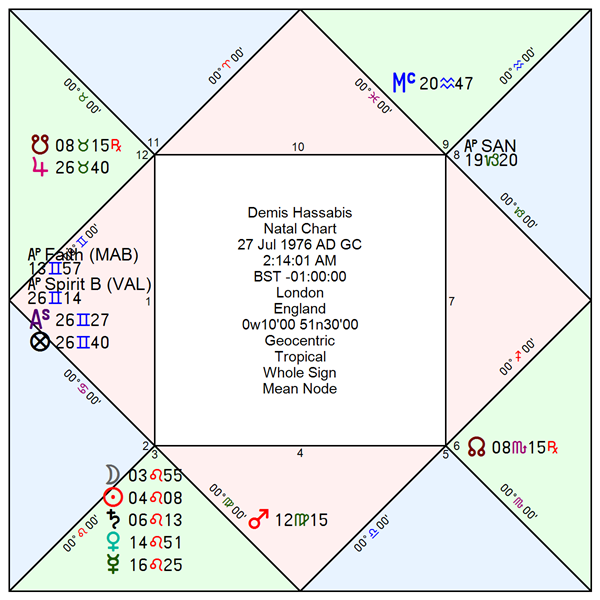
No Astrodatabank Record
Proposed rectification: 2:14:00 AM, ASC 26GE27’03”
Permission: I grant the unlimited use of this rectified horoscope by the public. Credit ‘Regulus Astrology LLC’ and include an accompanying link to this webpage.
Victor Model Factors favoring Jupiter/Taurus
Bound ruler: Sun, Moon. Recall that Valens says when the bound ruler of the Sun and Moon is the same planet, look no further for the victor.
With Gemini rising, Hassabis’s horoscope is dominated by a five-planet stellium in Leo in the 3rd house—Sun, Moon, Saturn, Venus and Mercury—while Mars occupies Virgo in the 4th. Yet Jupiter/Taurus in the 12th emerges as the proposed Victor through dynamic timing, particularly its correspondence with key manuscripts on memory and imagination during his doctoral research in cognitive neuroscience. Taurus is the exaltation of the Moon, whose significations include intuition, imagination and the capacity to form mental impressions. As a fixed earth sign, Taurus preserves, accumulates and retains, providing a useful analogy for memory as the storage of experience and acquired knowledge. Jupiter enlarges this capacity beyond the recollection of individual events toward the construction of a comprehensive understanding of how intelligence operates. Its placement in the 12th house is more difficult. Traditionally associated with isolation, confinement and matters hidden from ordinary awareness, the 12th is also cadent from the Ascendant and in aversion to it, describing activities removed from the individual’s immediate engagement with the external world. In Hassabis’s case, this withdrawal finds a constructive expression in research into the internal workings of the mind, especially the relationship between memory and imagination. His subsequent founding of DeepMind extended that investigation from human cognition to artificial intelligence, with the ultimate objective of developing machines capable of understanding the world. Jupiter/Taurus thus describes not simply a researcher, but an investigator concerned with the accumulation, preservation and synthesis of knowledge, whose most consequential achievements arise from examining processes ordinarily concealed from direct observation.
Physiognomy Model Factors favoring Leo, Aquarius
Rising sign: Gemini
Ruler of rising sign: Mercury/Leo
Rising decan: Aquarius
Ruler of rising decan: Saturn/Leo
Physiognomy. Demis Hassabis is a relatively short, compactly built man with a broad head, rounded forehead, and a face that narrows only moderately toward the chin. His height is not reliably documented, although photographs suggest a stature somewhat below average. His most conspicuous physical characteristic is advanced male-pattern baldness, leaving a high, exposed forehead. He has dark eyebrows, brown eyes, a moderately broad nose, and a closely trimmed beard and mustache. The lower portion of his face is relatively square, with prominent jawbones and a rounded but well-defined chin. His facial expression is generally relaxed, often accompanied by a slight smile, while his gestures when speaking are animated and expansive.
Astrological Significators. In John Willner’s physiognomy model, the two principal significators are Aquarius, the rising decan of Gemini, and Leo, the sign occupied by Mercury, ruler of the Ascendant. Aquarius contributes the square facial structure, particularly evident in the lower face, where the prominent jawbones and relatively broad chin produce an angular outline. Nevertheless, Leo appears to dominate the overall appearance. The pronounced male-pattern baldness is consistent with Willner’s Leo classification, as is the relatively short, compact stature. The broad forehead and rounded upper cranium further reinforce the Leonine contribution, while Aquarius accounts for the more angular construction of the jaw. Taken together, the two significators provide a reasonable correspondence with Hassabis’s observed physiognomy, with Leo supplying the dominant characteristics and Aquarius modifying the facial structure.
Moon’s Configuration
Stage 1 — Moon/Cancer Sextile Jupiter/Taurus
Delineation. The Moon’s most recent aspect is a sextile with Jupiter/Taurus, the proposed Victor of the horoscope. The Moon in Cancer possesses the strength of domicile, while Jupiter occupies Taurus, the exaltation of the Moon. This establishes a connection between the Moon’s powers of intuition, imagination and the formation of mental images, and Jupiter’s capacity to organize knowledge into a broader understanding of the world. Taurus, a fixed earth sign, emphasizes the retention and accumulation of information, providing an analogy for memory as the preservation of experience. Jupiter extends these significations beyond the recollection of individual events toward the synthesis of knowledge and the discovery of underlying principles.
Biographical Match. Hassabis’s research into episodic memory and imagination during his doctoral studies at University College London provides a close correspondence. His work demonstrated that remembering past experiences and imagining possible future events depend upon related neurological processes. Memory was therefore not simply the storage of past information but a mechanism through which the mind could construct representations of situations it had never experienced. This insight subsequently informed his conception of artificial intelligence as a system capable of learning from experience, constructing internal models and applying accumulated knowledge to unfamiliar problems.
Stage 2 — Moon Changes Signs from Cancer to Leo
Delineation. Following its sextile with Jupiter, the Moon leaves Cancer, its domicile, and enters Leo, the domicile of the Sun. Although the Moon-Jupiter sextile has separated by sign at birth, it remains within Lilly’s aspect moiety and therefore retains its influence. The change of signs marks a transition from the private, intuitive and investigative character of Cancer to the public, creative and entrepreneurial character of Leo. The Moon exchanges its own rulership for that of the Sun, suggesting that intellectual discovery must increasingly operate through the demands of leadership, public recognition and commercial organization. The underlying Jupiterian purpose persists, but its expression changes from investigation to practical application.
Biographical Match. Hassabis’s movement from the investigation of intelligence toward its commercialization provides the correspondence. His early career in computer games and the founding of Elixir Studios established the entrepreneurial dimension of his work, while his subsequent neuroscience research supplied the intellectual foundation for DeepMind. Founded in 2010, DeepMind attempted to translate insights about learning, memory and decision-making into commercially supported artificial intelligence. Its difficult fundraising, Google’s acquisition in January 2014 and the subsequent competition with OpenAI illustrate the recurring tension between scientific objectives and the financial and organizational demands of developing technology.
Stage 3 — Moon/Leo Conjunct Sun/Jupiter Bound of Leo
Delineation. The Moon’s next application is a conjunction with the Sun in Leo, with the Sun occupying the Egyptian bound of Jupiter. Since Jupiter/Taurus is also the proposed Victor, the Moon’s configuration begins with separation from Jupiter and concludes with application to a luminary situated in Jupiter’s bound. Jupiter therefore participates in both ends of the lunar sequence, first through direct aspect and subsequently through bound rulership. The Sun in its domicile supplies the authority, visibility and capacity for leadership necessary to bring Jupiter’s intellectual purpose into the world. The application to the Sun indicates the eventual concentration of personal identity, public recognition and institutional authority around the Victor’s objective of acquiring and extending knowledge.
Biographical Match. Hassabis’s career follows this progression from scientific investigation to public achievement. His research into memory and imagination provided the conceptual foundation for DeepMind, whose breakthroughs in reinforcement learning, AlphaGo and AlphaFold established his international reputation. AlphaGo’s defeat of Lee Sedol in March 2016 demonstrated the capacity of artificial intelligence to master problems previously considered beyond the reach of machines. AlphaFold2’s breakthrough in November 2020 extended this achievement into the natural sciences, using AI to predict protein structures. The award of the Nobel Prize in Chemistry in October 2024 represents a particularly clear correspondence, conferring public recognition upon research that advanced humanity’s understanding of biological processes. The Sun’s position in Jupiter’s bound reinforces the interpretation that institutional authority and recognition ultimately serve a larger scientific purpose.
Stage 4 — New Moon Horoscope: Persistence and Difficulty Changing Direction
Delineation. The Moon is only 13′ of arc behind the Sun, placing Hassabis’s birth immediately before the New Moon. The Moon is deeply combust, although its placement in Leo, the Sun’s domicile, provides some mitigation because the Sun receives and rules the Moon. Nevertheless, the proximity of the luminaries indicates a limited separation between conscious direction and the intuitive processes represented by the Moon. This concentration of purpose can produce sustained commitment to a single intellectual objective, but it can also impair the capacity to reconsider fundamental assumptions when circumstances change. The Moon’s application to the Sun reinforces the tendency to subordinate intuition and independent judgment to an established direction. The principal difficulty is not necessarily an inability to change methods, but a reluctance to abandon the underlying conception of how a problem should be solved.
Biographical Match. Hassabis demonstrated a consistent intellectual purpose from childhood, progressing from chess and computer games to neuroscience and artificial intelligence. His persistence produced both setbacks and breakthroughs. At Elixir Studios, prolonged development of technically ambitious games contributed to financial difficulties and the company’s closure in April 2005. At DeepMind, his commitment to reinforcement learning and systems grounded in experience helped produce AlphaGo, but also contributed to his initial underestimation of large language models. Although Google’s researchers introduced the Transformer architecture in June 2017, DeepMind did not exploit its commercial potential as effectively as OpenAI, whose release of ChatGPT in November 2022 exposed the cost of this strategic misjudgment. Conversely, Hassabis’s decision to undertake a fundamental redesign of AlphaFold in 2019, despite initially disappointing results, culminated in the AlphaFold2 breakthrough. These episodes illustrate the dual character of the New Moon configuration: persistence can sustain research through years of uncertainty, but the same determination can delay recognition of competing approaches.
Influence of Sect
Sect. Hassabis has a nocturnal horoscope, placing Mars/Virgo and Venus/Leo in sect, while Jupiter/Taurus and Saturn/Leo are out of sect. Mars/Virgo, the in-sect malefic, finds a constructive expression in machine learning, where technical problems are solved through systematic experimentation, repeated testing and incremental improvement. This correspondence extends from Hassabis’s early computer games to DeepMind’s reinforcement-learning systems and the development of AlphaFold. Venus/Leo, the in-sect benefic, contributes the capacity to attract talented collaborators and organize scientific teams around ambitious creative objectives, rather than manifesting primarily through personal luxury or celebrity. Jupiter/Taurus, the proposed Victor, is the out-of-sect benefic in the 12th house. Its capacity to advance Hassabis’s scientific purpose is substantial but dependent upon financial resources and institutional support controlled by others, as demonstrated by Elixir’s collapse, DeepMind’s fundraising difficulties and Google’s subsequent acquisition. Saturn/Leo, the out-of-sect malefic, introduces the more persistent difficulty of institutional constraint, organizational separation and the burdens of leadership. These themes recur in Hassabis’s surrender of executive responsibilities at Elixir, the demands imposed by Google’s corporate structure and the departure of prominent DeepMind researchers. The sect configuration therefore distinguishes the technical and collaborative strengths that enabled his scientific breakthroughs from the financial and organizational limitations that repeatedly complicated their commercial realization.
Film links
Both documentaries are directed by Greg Kohs and available free on Google DeepMind’s official YouTube channel.
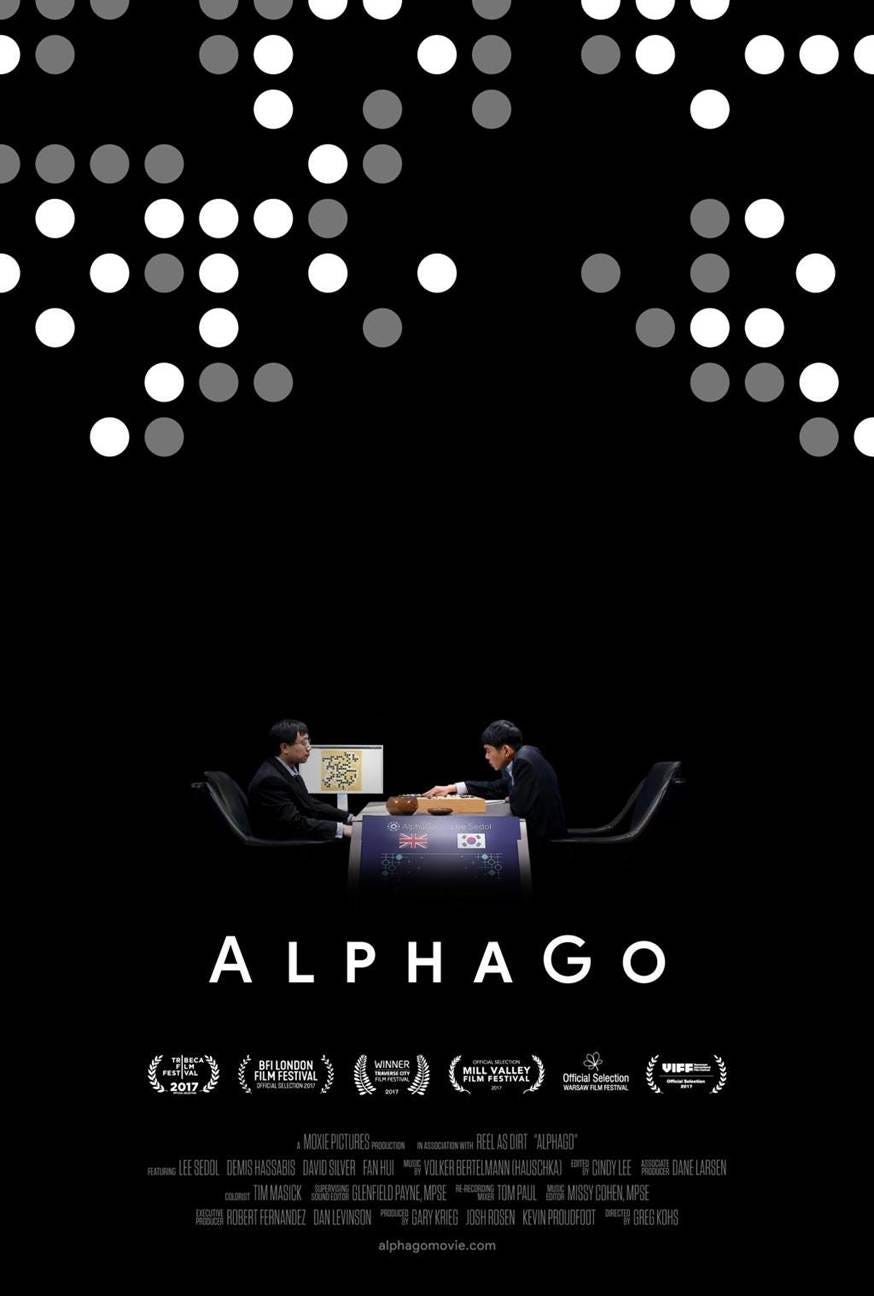
AlphaGo (2017)
The 2016 contest between AlphaGo and Lee Sedol, marking a turning point in artificial intelligence.
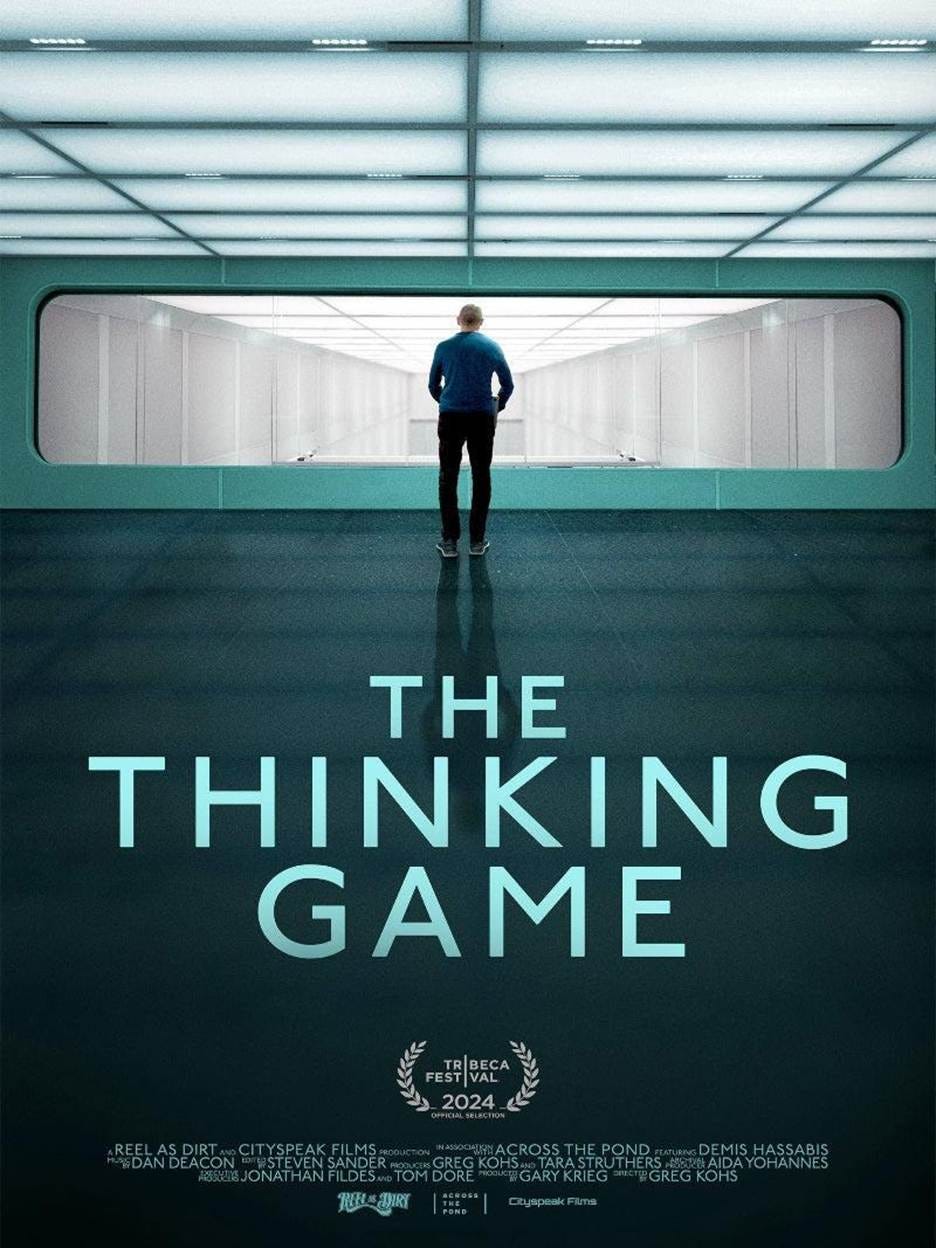
The Thinking Game (2024)
A biographical documentary following Hassabis and DeepMind through the development of AlphaFold and the pursuit of AGI.
Complete biographical chronology, rectification and time lord studies available in Excel format as a paid subscriber benefit. File is behind the paywall.