

Martin John Bryant occupies an unusual place in this series on Jupiter in Cancer. At first glance the horoscope appears to fit the project perfectly: Jupiter is placed in Cancer, its sign of exaltation, and falls within the final degrees of the sign in the bound of Saturn. Yet the life story quickly reveals that Jupiter is not the dominant actor in the chart. Cadent in the 6th house and out-of-sect in a nocturnal figure, Jupiter lacks the prominence found in many of the philosophers, statesmen, and public figures examined elsewhere in this series. Instead, the horoscope is driven by a far darker configuration.
The key to understanding Bryant is the Moon’s Configuration. The Moon separates from Saturn in Aries and applies to Mars retrograde in Libra. In a single sequence the chart moves from failed restraint to destructive action. Saturn signifies weak boundaries, poor self-control, and the inability of authority figures to impose lasting discipline. Mars signifies grievance, conflict, inheritance, and ultimately violence. The chronology of Bryant’s life repeatedly returns to this pattern, from childhood behavioral problems and accumulated resentments to the Port Arthur massacre itself. More than any other factor in the horoscope, the Moon’s application from Saturn to Mars describes the trajectory for which Bryant became known.
What, then, does Jupiter in Cancer contribute? The answer appears in a surprisingly literal way through the symbolism of the 6th house. One manifestation occurred while Bryant was working at the residence of Helen Harvey and her mother Hilza. In June 1990 health and animal-control authorities intervened at a property overwhelmed by a large number of neglected animals, many of which were removed from the premises. A second manifestation appears after Bryant's imprisonment. Photographs taken in the years following the Port Arthur massacre show a noticeable increase in both body weight and facial fullness compared to his lean, athletic appearance as a young man. As the house of illness and bodily afflictions, the 6th house can signify habits that undermine physical health, while Jupiter naturally promotes growth, expansion, nourishment, and excess. Jupiter in Cancer readily suggests weight gain through comfort and indulgence. Yet this Jupiter is out-of-sect, placed in the bound of Saturn, and receives a superior square from Saturn/Aries. Saturn introduces themes of inadequate control and weak boundaries, producing excess without management. The result is not healthy stewardship but situations where growth exceeds restraint: too many animals, inadequate oversight, and a tendency toward overindulgence that eventually manifests in the body itself. These episodes are secondary to the larger story of the horoscope, yet they provide a revealing glimpse of how Jupiter in Cancer operated in the life of Martin Bryant.
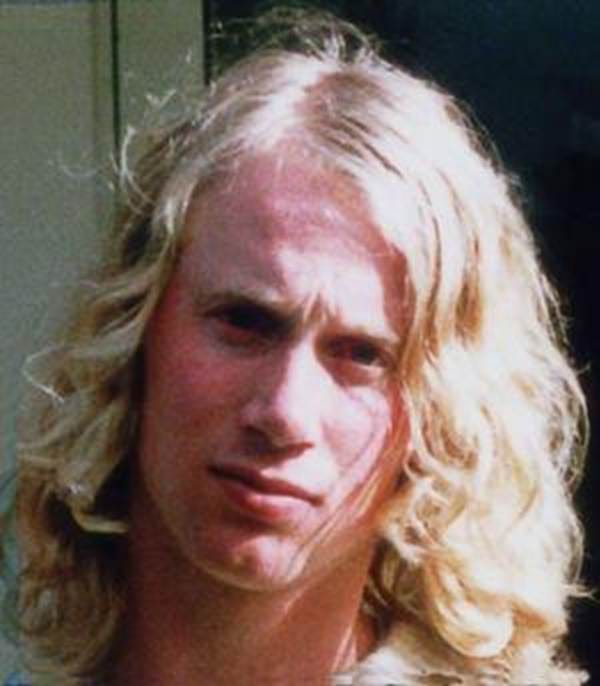
Martin John Bryant was the perpetrator of the Port Arthur massacre of 28 April 1996, the deadliest mass shooting in Australian history. The most detailed biographical reconstruction of his life is Robert Wainwright and Paola Totaro, Born or Bred? Martin Bryant: The Making of a Mass Murderer (Fairfax Books, 2010), which traces the social, psychological, and family influences that culminated in the massacre. Born in Hobart and raised in Tasmania, Bryant was regarded as unusual from an early age. Teachers, neighbors, and relatives consistently described him as socially awkward, emotionally immature, and prone to bizarre or disturbing behavior. School reports documented aggressive conduct, repeated disciplinary problems, and an inability to conform to ordinary classroom expectations. Psychological assessments produced similarly bleak conclusions, with one psychiatrist warning that Bryant’s intellectual and emotional limitations would likely prevent him from functioning independently. Yet his physical appearance often concealed these problems. As a young man Bryant was blond, lean, athletic, and outwardly resembled a surfer or beach sportsman. Many people recalled that he appeared perfectly normal until he began speaking, at which point his intellectual limitations, inappropriate laughter, odd mannerisms, and inability to conduct an ordinary conversation became immediately apparent.
Bryant spent much of his childhood around the Tasman Peninsula, where his family maintained a holiday property near Port Arthur. The chronology of his youth reveals a pattern of impulsive and often self-destructive behavior. Shortly after leaving primary school he suffered serious burns while playing with fireworks. When questioned afterward about whether he had learned a lesson from the accident, Bryant reportedly indicated that he intended to continue using them. Firearms also entered his life at an early age. After receiving an air gun as a teenager, he developed a fascination with shooting that would remain with him into adulthood. According to Wainwright and Totaro’s reconstruction, Bryant’s connection to Port Arthur itself began long before the events of 1996. They recount an incident from April 1980 in which Bryant was reportedly removed from the Broad Arrow Café after attempting to sell shell crafts to tourists. Whether minor or significant at the time, the episode appears to have remained fixed in his memory. The authors present it as one of many grievances and humiliations that Bryant accumulated over the course of his life, often preserving resentments long after others had forgotten them.
A major turning point came in 1987 when Bryant met Helen Harvey, a wealthy heiress to part of the Tattersall’s lottery fortune. Harvey was more than a generation older than Bryant and gradually became his benefactor, companion, and protector. Their friendship developed amid increasingly chaotic conditions at the Harvey household. In June 1990 health authorities and animal welfare officials intervened at the Harvey property after concerns were raised about the condition of both the occupants and the large number of animals living there. Numerous animals were removed from the premises, while Helen Harvey and her elderly mother Hilza Harvey required medical attention. Hilza died only weeks later, and Bryant soon became an even more constant presence in Helen Harvey’s life, eventually moving in with her and accompanying her almost everywhere.
The relationship between Bryant and Harvey remains one of the most unusual aspects of the case. Harvey financed an increasingly extravagant lifestyle that included frequent shopping trips, travel, and a succession of new automobiles. Friends and neighbors often struggled to understand the nature of the attachment, describing Bryant as dependent upon Harvey for companionship, guidance, and financial support. In October 1992 Harvey was killed when her vehicle crossed onto the wrong side of the road and collided with an oncoming car. Bryant was a passenger and suffered serious injuries. The death was officially ruled an accident, but it immediately generated suspicion because friends and acquaintances had previously witnessed Bryant aggressively grabbing the steering wheel while riding as a passenger in other vehicles, including cars driven by family members. According to Wainwright and Totaro, some who knew the pair suspected that Bryant may have seized the wheel during the fatal journey, causing the collision. Police investigated the circumstances of the crash, but no evidence sufficient to support criminal charges was produced, no prosecution followed, and the allegation remains unproven. Nevertheless, the unusual circumstances surrounding Harvey’s death became part of the public discussion of Bryant years before Port Arthur.
The deaths of both Harvey and Bryant’s father fundamentally altered the course of his life. Harvey’s estate left Bryant unexpectedly wealthy, while the suicide of his father Maurice Bryant in 1993 removed one of the few remaining authority figures who had spent years attempting to impose structure and discipline upon him. The inheritance gave financial independence to a man who had previously struggled to function in ordinary employment and social settings. Over the next several years Bryant drifted through a life of international travel, firearms purchases, eccentric spending, and growing isolation. Wainwright and Totaro portray a man who accumulated grievances rather than resolving them, preserving slights, humiliations, and perceived betrayals for years. Those resentments eventually converged with his intellectual limitations, emotional instability, fascination with violence, and access to firearms. On 28 April 1996 Bryant returned to Port Arthur, entered the Broad Arrow Café, and began the massacre that killed thirty-five people and wounded twenty-three others. Sixteen years after his reported expulsion from the café, the site became the starting point of one of the worst mass killings committed by a lone gunman in modern history.
The Port Arthur massacre produced one of the most consequential public-policy responses in modern Australian history. Within months of the attack, Prime Minister John Howard secured agreement from Australia’s states and territories on the National Firearms Agreement (NFA), which imposed uniform firearm licensing and registration requirements, banned most semi-automatic rifles and semi-automatic and pump-action shotguns, and established a mandatory buyback program. More than 650,000 prohibited firearms were surrendered and destroyed. Although debate over the effectiveness of particular provisions continues, the Port Arthur massacre remains the defining event in Australia’s modern gun-control history, with the reforms frequently cited internationally as one of the most significant legislative responses to a mass shooting.
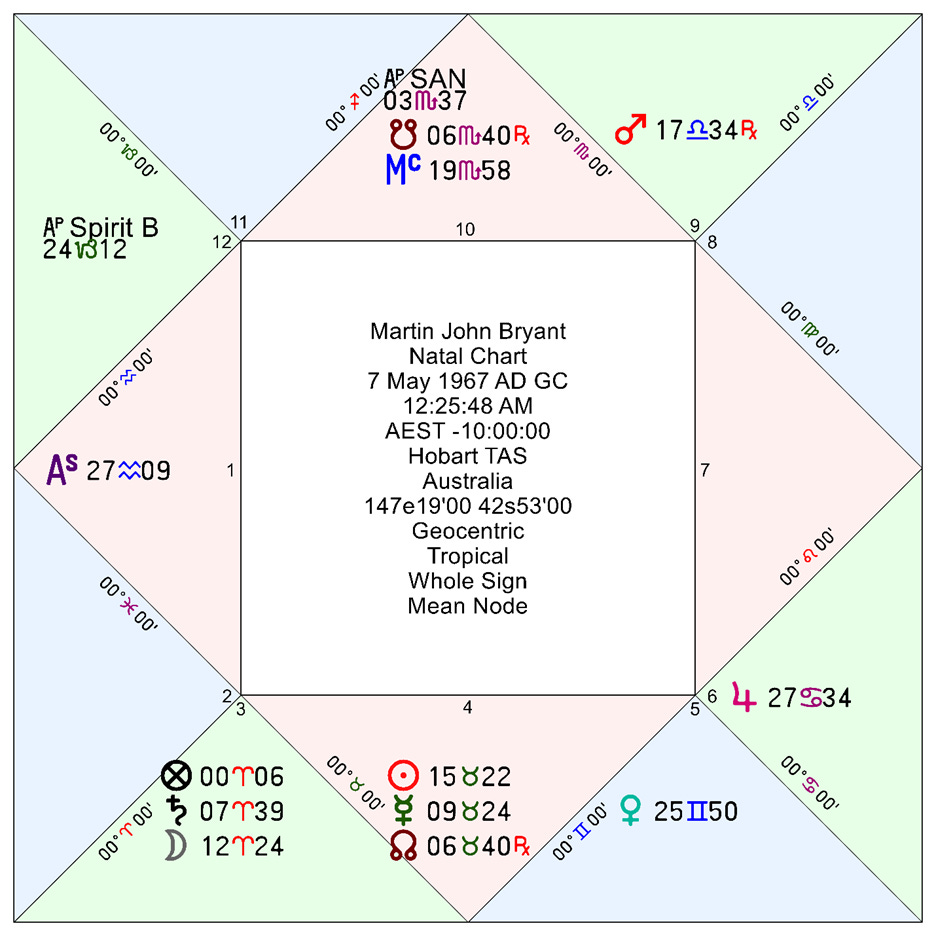
Rodden Ratin C, Accuracy in Question; 2:45 PM, ASC 24PI07
Proposed rectification: 12:25:48 AM, ASC 27AQ09’28”
The analytical models used in the sections below are part of a larger research program developed across longer white papers and case studies, where the historical sources, rules, and testing methodology are laid out in full. These database entries show the models in practice; readers who want the theoretical foundations can start with the background papers below:
Rectification Hub (I wrote the book on it!)
Soul Hub (white paper, Victor model statistical tests, Moon’s Configuration studies)
Physiognomy Hub (white paper, examples)
Victor Model Factors favoring Mars/Libra-retrograde
Sign ruler: MC, Moon, Lot of Fortune, Prenatal Syzygy
Bound ruler: Prenatal Syzygy
Mars 17LI34-retrograde emerges as victor of the horoscope because the major events for which Martin John Bryant is remembered repeatedly return to Martian themes of grievance, conflict, and destructive action. Retrograde in Libra, Mars functions much like Mars in Aries, expressing itself in a direct and aggressive manner despite being placed in the sign of detriment. Mars occupies the 9th house by whole-sign houses and the 8th house by quadrant houses, linking both Port Arthur itself—a location associated with travel, pilgrimage, and places distant from the home—and the themes of inheritance, death, and another person’s resources. The symbolism first appears in adolescence when Bryant developed an enduring resentment after being removed from the Broad Arrow Café at Port Arthur, an incident that occurred during a Mars-activated period and which he reportedly never forgot. Sixteen years later, with Mars again heavily activated, he returned to the same location and carried out the massacre that defined his life. Mars in the 8th house also describes the central role of Helen Harvey’s estate in Bryant’s life following her death, while the unusual circumstances surrounding the fatal automobile accident generated suspicions that persisted for years afterward. In this horoscope Mars does not signify momentary anger so much as the preservation of old grievances until an opportunity arises to act upon them, making it the planet that most consistently describes the trajectory of Bryant’s life.
Physigonomy Model Factors favoring Aries, Aquarius
Rising sign: Aquarius
Ruler of rising sign: Saturn/Aries
Rising decan: Libra
Ruler of rising decan: Venus/Gemini
Planets in sign of rising decan: Mars/Libra-retro
The surviving photographs of Martin Bryant taken during the years immediately preceding the Port Arthur massacre present a striking contrast between appearance and reputation. Contemporary descriptions repeatedly emphasized that Bryant was tall, lean, physically fit, and conventionally attractive, possessing the appearance of a classic Australian surfer. His body was narrow through the waist and shoulders with little excess weight, while the face was long, angular, and bony rather than fleshy. The forehead was broad, the cheekbones prominent, and the jaw tapered toward a relatively narrow chin, producing an elongated ovate facial shape. Long blond hair further softened the appearance and contributed to an image that many observers initially found appealing. As noted by several acquaintances, the disconnect came when Bryant began speaking; the handsome exterior created expectations that were quickly overturned by his unusual mannerisms, speech patterns, and intellectual limitations. These observations apply primarily to Bryant as a young man in his twenties. Photographs taken during his later years in prison show a noticeably heavier physique and fuller face. Rather than reflecting the primary physiognomic significators derived from the Ascendant sign and rising decan, this change is more plausibly understood as a modification arising from Jupiter/Cancer in the 6th house of illness, where Jupiter’s tendency toward growth and expansion operates under weakened restraint from Saturn’s superior square. The result is a substantial departure from the lean Aries-Aquarius body type evident in the years immediately preceding the Port Arthur massacre.
Astrologically, the strongest physiognomic significators are Aries and Aquarius. Aries is represented through Ascendant ruler Saturn/Aries, which contributes the lean body type and the bony ovate facial structure. In traditional physiognomic models, Aries is among the signs most associated with angular features, prominent bone structure, and a wiry physique, all of which are evident in Bryant’s appearance before the massacre. Aquarius contributes more subtly. While Aquarius is often associated with a taller, elongated frame, its most distinctive marker here is the long wavy hair. The flowing curls resemble the undulating water lines of the Aquarius glyph and soften what would otherwise be a more severe Aries presentation. Together the two signs produce the unusual combination repeatedly remarked upon by those who knew Bryant: a youthful, athletic, and outwardly attractive appearance that contrasted sharply with the disturbed personality revealed through his behavior and speech.
Moon’s Configuration
Phase I: Moon Separates from Saturn/Aries (2nd/3rd)
Delineation. The Moon separates from Saturn 7AR39 in Aries. There is no void of course condition and no out-of-sign aspect sequence; the configuration proceeds directly from Saturn to Mars. Saturn in Aries signifies lack of restraint, weakened boundaries, and the failure of authority figures to impose effective controls. Placed in the 2nd house by whole-sign houses and the 3rd house by quadrant houses, Saturn describes the formative environment of Bryant’s early life, including family relationships, education, and neighborhood interactions. Saturn in Aries often struggles to establish discipline, patience, and self-control, producing impulsive behavior that repeatedly tests the limits imposed by others.
Biographical Match. From childhood Bryant exhibited behavioral problems that teachers, psychologists, and family members found difficult to manage. School reports documented violent tendencies, frequent classroom expulsions, and an inability to conform to ordinary social expectations. The same pattern continued into adulthood. Parents, educators, trustees, and eventually the criminal justice system repeatedly attempted to impose structure on a personality that resisted it. Saturn’s weakness in Aries is visible in the failure of these efforts to establish lasting boundaries. Even Bryant’s inheritance from Helen Harvey, which might have provided stability and independence, instead removed many of the external constraints that had previously limited his behavior. The Moon’s separation from Saturn suggests a life trajectory that begins with inadequate restraint and ineffective supervision.
Phase II: Moon Applies to Mars/Libra-Retrograde (8th/9th)
Delienation. The Moon applies to Mars 17LI34-retrograde in Libra. Mars is retrograde and functions much like Mars in Aries, giving the configuration a strongly Martian emphasis. Positioned in the 9th house by whole-sign houses and the 8th house by quadrant houses, Mars joins themes of travel, distant places, and ideological fixation with those of inheritance, death, and another person’s resources. Unlike some Moon-Mars configurations that manifest as brief bursts of anger, this one operates through the accumulation of grievances over long periods of time before decisive action is taken.
Biographical Match. The humiliation of being expelled from the Broad Arrow Café in April 1980 remained alive in his memory for sixteen years before the massacre began at that same location. The inheritance from Helen Harvey, obtained after her fatal automobile accident, likewise became a defining feature of his adult life and financed years of travel, firearm purchases, and eccentric spending. The final expression of the configuration occurred on 28 April 1996 when Bryant journeyed to Port Arthur and carried out the massacre for which he is remembered. The Moon’s application from Saturn to Mars describes a progression from failed restraint to violent action. Boundaries that were never effectively established in youth ultimately gave way to Mars acting through grievance, conflict, death, and revenge. In this horoscope, the Moon’s configuration serves as a concise summary of Bryant’s life story: a troubled beginning marked by weak controls followed by a gradual movement toward increasingly destructive expressions of Mars.
Influence of Sect
The horoscope is nocturnal, making Mars in-sect while Saturn is out-of-sect. This distinction sharpens the contrast between the two planets that frame the Moon’s configuration. Saturn/Aries out-of-sect increases the disorderly and uncontrolled qualities of Saturn in its sign of fall. Rather than providing discipline, restraint, and respect for authority, Saturn contributes impulsiveness, poor self-regulation, and the repeated failure of external controls imposed by parents, teachers, trustees, and other authority figures. By contrast, Mars/Libra-retrograde in-sect does not signify random or reckless violence. Although Mars remains the principal agent of destruction in the horoscope, sect gives it greater effectiveness and capacity for execution. The result is violence that is planned, sustained, and carried through to completion rather than abandoned through incompetence or hesitation. In this way sect worsens the Saturn side of the Moon’s configuration while strengthening the ability of Mars to successfully carry out its objectives.
Early or Late Bloomer?
Martin John Bryant was born shortly after a Full Moon, placing him in the late bloomer category according to the lunar phase model. As of June 2026 he remains alive at age 59. With a current lifespan of approximately 59.1 years, the provisional midpoint falls at 29.6 years, corresponding to roughly December 1996. Because Bryant is still living, any assessment remains tentative and subject to revision should he survive substantially longer.
At first glance Bryant appears to be a model failure. The defining event of his life—the Port Arthur massacre of 28 April 1996—occurred at age 28 years and 11 months, only months before the current midpoint and technically on the first half of life side of the ledger. However, the chronology suggests a more nuanced interpretation. Before the midpoint Bryant was largely an obscure and socially dysfunctional individual known only to family, friends, and local authorities. After the midpoint came the consequences of Port Arthur: conviction on seventy-two charges, thirty-five life sentences, permanent incarceration, and his transformation into one of the most infamous criminals in Australian history. If imprisonment for the remainder of his natural life is viewed as the effective end of Bryant’s functional participation in society, then the most consequential chapter of his existence began only after the midpoint was reached. For that reason, the horoscope can be viewed as a borderline case that partially supports the late-bloomer thesis, though less cleanly than many examples where fame, accomplishment, or notoriety arrive well after the midpoint of life.
AI Notice: ChatGPT contributed to this article.
Complete biographical chronology, rectification and time lord studies available in Excel format as a paid subscriber benefit. Files are behind the paywall.