

Three chairs. One crisis. The restoration—and transformation—of monetary authority.
The Federal Reserve’s horoscope is not static. It unfolds through people. In earlier chapters, the institution struggled to define itself—first subordinated to Treasury finance, then gradually asserting independence after the Treasury–Federal Reserve Accord. That settlement did not resolve the deeper contradiction embedded in the chart: the tension between expansion and restraint. By the late 1970s, that contradiction reached a breaking point. Inflation—no longer cyclical but structural—had moved beyond the reach of incremental policy. The institution now required not refinement, but reset.
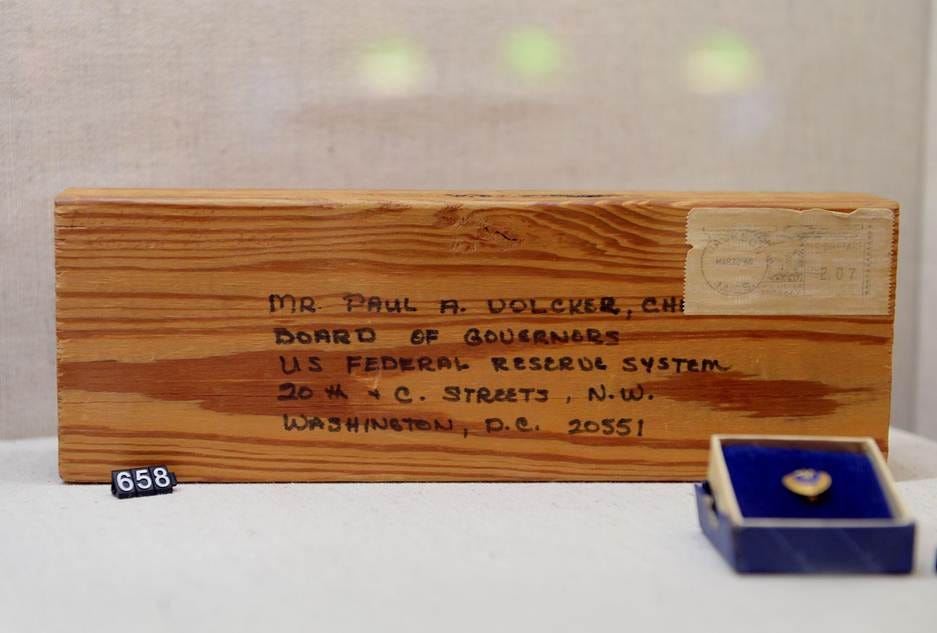
The Crisis Inherited: Inflation as Sagittarius
By 1978, inflation had become a defining feature of the American economy. From an astrological standpoint, inflation belongs to Sagittarius—the sign of expansion without boundary. At its best, Sagittarius promotes growth and opportunity; at its worst, it exaggerates, distorts scale, and loses proportion. When activated without restraint, it produces systems that expand faster than they can be governed.
The late 1970s represent the terminal phase of that process. Monetary policy had accommodated expansion for too long, and the mechanisms required to impose discipline were either politically constrained or structurally incomplete. The result was not simply rising prices, but a loss of credibility. The Federal Reserve was no longer seen as an institution capable of enforcing limits.
G. William Miller: Administration Without Authority (1978–1979)
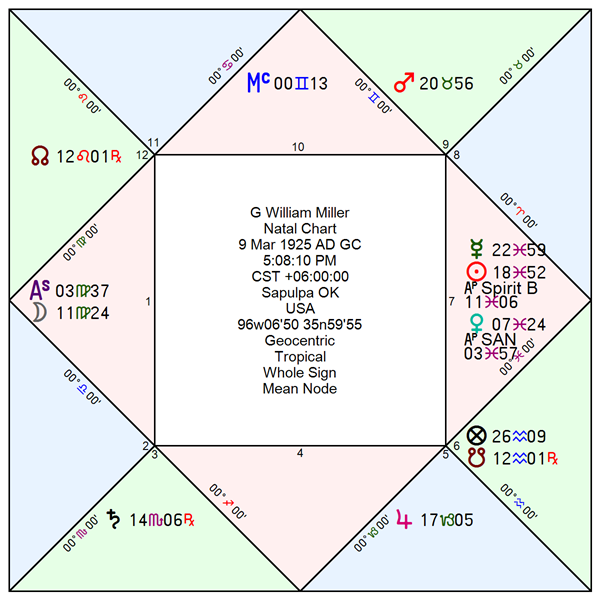
The appointment of G. William Miller reflects a moment when the Federal Reserve attempted to manage crisis through structure rather than policy. His tenure is often dismissed—and not without reason. He lacked both the temperament and the authority required for the moment; inflation accelerated, markets destabilized, and confidence in the institution deteriorated rapidly. Yet to reduce Miller to failure alone misses the point. His role in the Federal Reserve story is transitional.
Miller’s influence is best understood across both of his roles—first as Federal Reserve Chair and then as Treasury Secretary. During this period, a series of legislative changes reshaped the institutional framework of the financial system, culminating in the Depository Institutions Deregulation and Monetary Control Act (DIDMCA). The elimination of interest rate ceilings under DIDMCA proved decisive. It removed a structural constraint that had previously limited how far rates could rise, thereby enabling the aggressive tightening that would follow under Paul Volcker.
Astrologically, Miller represents a phase where the system reorganizes itself while losing control of outcomes. Structure expands, but authority weakens. When imbalance becomes too great, the Federal Reserve does not immediately reverse course; it first attempts to stabilize itself through institutional adjustment. The result is drift—an expansion of framework without a corresponding assertion of control.
Paul Volcker: Discipline Restored (1979–1987)
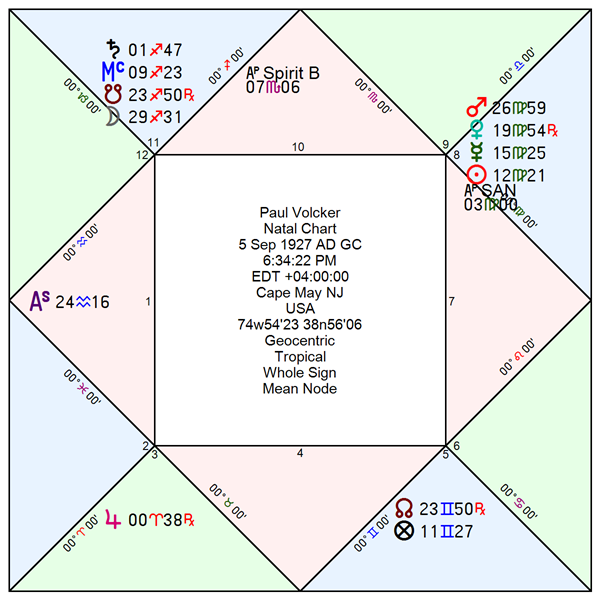
If Miller represents drift, Paul Volcker represents reversal. Volcker enters the Federal Reserve story at the precise moment when expansion can no longer be sustained. His task was not to fine-tune policy, but to reestablish limits.
That process begins with the October 6, 1979 policy shift—the “Saturday Night Special”—in which the Federal Reserve altered its operating framework and allowed interest rates to rise sharply. The consequences were immediate and severe: rates surged, recession followed, and political pressure intensified. This marks the system’s transition from expansion to contraction—from Sagittarius excess to Capricorn discipline.
Volcker’s defining characteristic is not simply his willingness to raise rates, but his willingness to maintain that stance in the face of opposition. By 1981, interest rates exceeded 20 percent. The cost was immense—a deep recession—but the effect was decisive. Inflation, which had dominated the previous decade, was broken.
Astrologically, Volcker represents the reassertion of boundary. Where the system had expanded beyond control, it is now forced back within limits. The Federal Reserve ceases to accommodate and instead imposes structure on the economy. This is the turning point at which the institution reclaims authority over its own mandate.
Alan Greenspan: Expansion Reimagined (1987–2006)
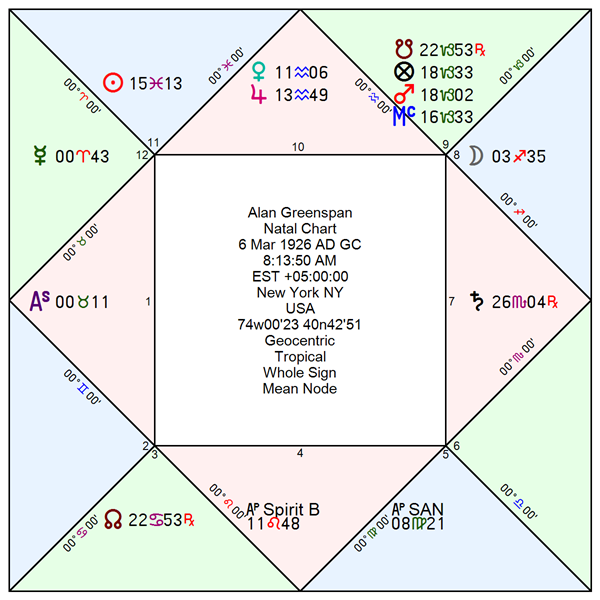
With inflation subdued, the Federal Reserve entered a new phase under Alan Greenspan. If Volcker restored discipline, Greenspan reintroduced expansion—but under a different set of assumptions. His tenure is defined by the rapid response to the 1987 stock market crash, the productivity expansion of the 1990s, and the gradual normalization of intervention as a standard policy tool.
Under Greenspan, the Federal Reserve evolves from a reactive institution into a preemptive one. Liquidity is no longer reserved for crisis alone; it is deployed in anticipation of instability. Markets begin to incorporate this behavior into their expectations, and the Federal Reserve assumes a central role in shaping those expectations.
Astrologically, this marks a return to expansion, but not the uncontrolled expansion of the 1970s. Instead, it is managed—guided by the memory of Volcker’s discipline. Yet the underlying tension remains. Expansion requires support, and each cycle of support increases dependence on intervention. Stability is maintained, but at the cost of growing structural reliance on liquidity.
Three Phases of the Federal Reserve Horoscope
Taken together, these three chairs form a coherent sequence: Miller reflects expansion without control and institutional drift; Volcker imposes contraction and restores authority; Greenspan refines the system through managed expansion. This sequence is not incidental—it reflects the underlying rhythm of the Federal Reserve itself.
Now meet the men behind this chapter of Federal Reserve history: